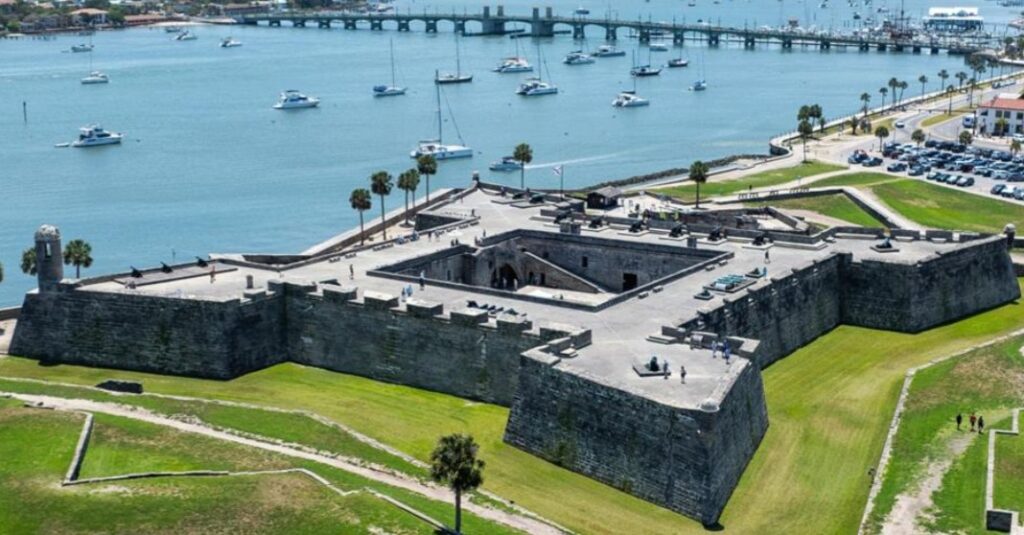
Castillo de San Marcos in St. Augustine Florida.
Built by the Spanish in St. Augustine to defend Florida and the Atlantic trade route, Castillo de San Marcos National Monument preserves the oldest masonry fortification in the continental United States and interprets more than 450 years of cultural intersections.
The Castillo de San Marcos is a major tourist attraction where you can step back in time and see the history of the beginnings of America. The Spanish began constructing the Castillo de San Marcos in 1672 and completed it in 1695 after 23 years. The fort was officially removed from the active list of fortifications in 1900 and was preserved and recognized as a national monument in 1924.
St. Augustine’s first 100 years were plagued by poverty and pirate attacks. Beginning in its founding year of 1565, nine wooden forts were built one right after the other as rot, termites, storms, tides, and fires destroyed the fragile structures. After years of petitions, a devastating raid in 1668 convinced the Spanish crown that La Florida truly needed strong defenses.
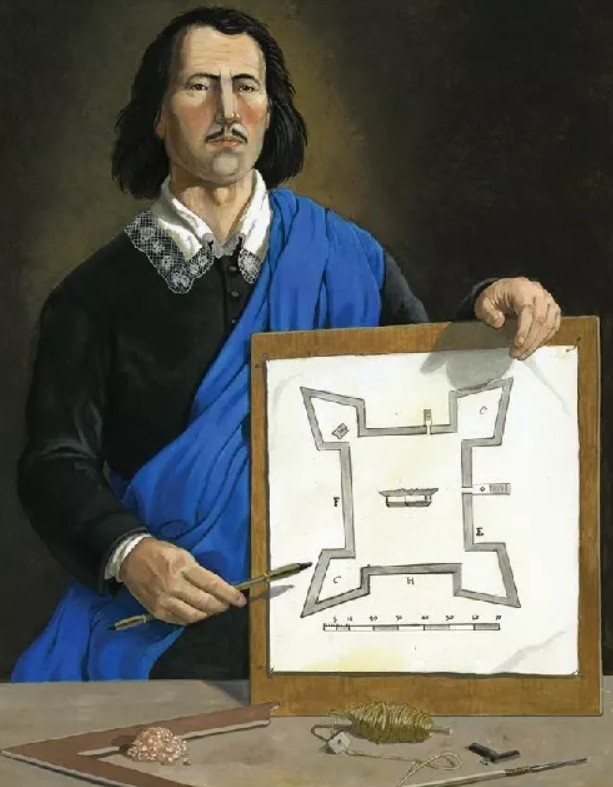
Don Manuel de Cendoya, who was appointed governor of La Florida after nearly 21 years of service to the crown, arrived in St. Augustine in July of 1671 and immediately went to work on preparations for construction. Engineer Ignacio Daza arrived from Havana a year later and set about designing the fortification. On the afternoon of October 2, 1672, the governor and his officers raised shovels to break ground on the ambitious project. Five months later, both Cendoya and Daza were deceased, likely victims of a winter illness. They had seen the Castillo’s eastern wall and bastions raised to a height of 11 feet.
Over the next 23 years, six different governors struggled against changing plans, financial setbacks, epidemics, storms, starvation, pirate attacks, and lack of royal support. It was not until August of 1695 that the Castillo was declared finished, under the supervision of Laureano de Torres y Ayala. In the end, the project on which Cendoya had planned to spend about 70,000 pesos totaled at least 138,375 pesos, approximately $2,845,000 in 2020 U.S. dollars.